
Why are we always on the back foot with our community?
Because you're running a campaign, and you're not in a campaign. You're in a situation, and situations move faster than any plan you'll get through approval, so you spend your time catching up instead of leading.
That distinction sounds like semantics. It isn't. It explains why so many good plans are dead on arrival, and why writing a better one won't save the next.
You know how this goes
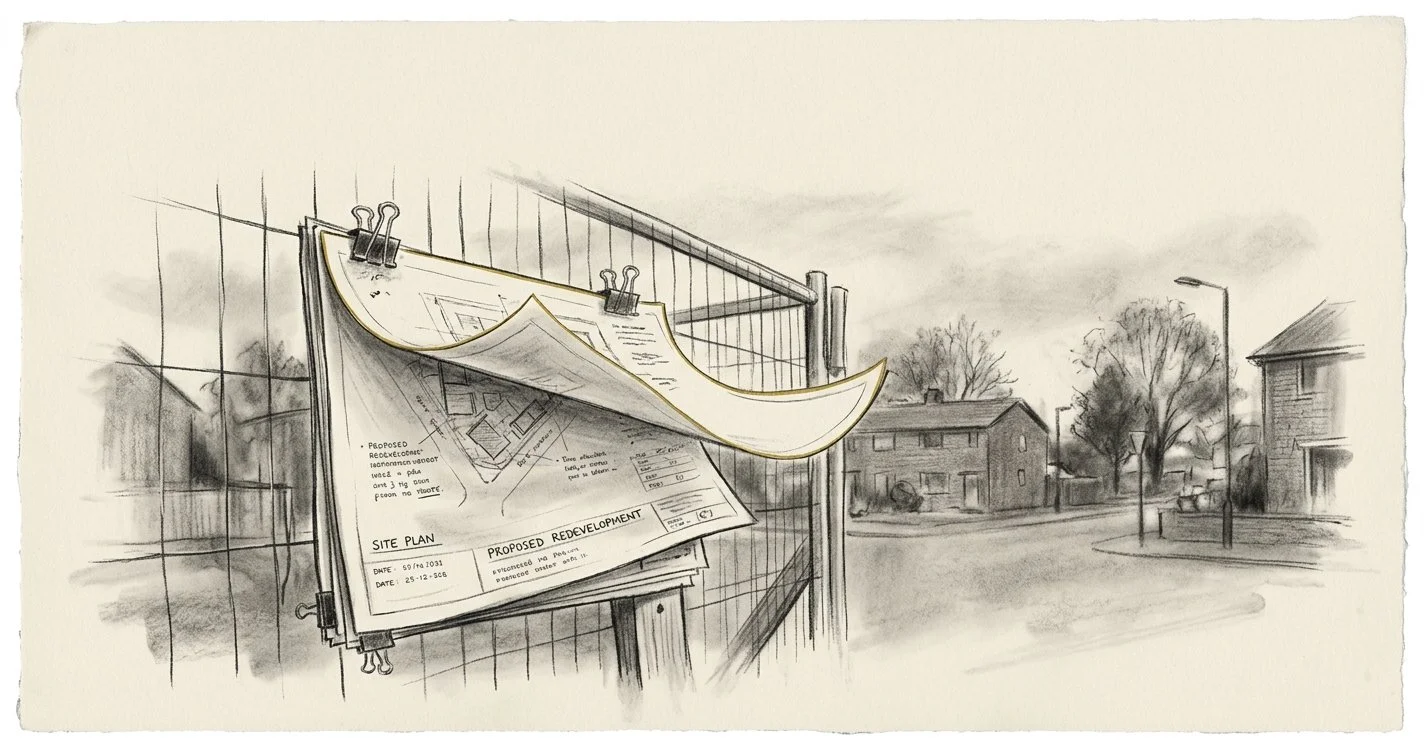
The plan gets drafted in March off a February brief. Legal has it in April. The executive wants the key messages softened, so it goes round again. By the time it's approved in June, the construction schedule has slipped, a residents' group has formed, and a local councillor is asking questions nobody planned for. Your plan still says phase one is raising awareness. The community is well past awareness. They're furious about the truck movements.
So you do what everyone does. You write an addendum. Then a reactive Q&A. Then a holding statement for the thing nobody saw coming. Six months in, you've got a plan nobody follows and a folder of documents that each describe a slightly different project.
That's not a drafting problem. You didn't write a bad plan. You wrote the wrong kind of plan.
Why it keeps happening
Campaign thinking assumes three things. You know what you want to say. Your audience will be roughly where you left them. And the thing ends. Product launches work like that. So do most brand campaigns.
A major project, a service reform or a long consultation doesn't work like that at all. The matter is unresolved. The people watching have something real at stake, as neighbours, employees, patients or ratepayers. And they're not going anywhere. They aren't waiting for your message. They're forming a view every week from what they see out the window, what they hear at the school gate and what's being said in the local Facebook group.
Your approval process was built for campaigns too. Every layer of sign-off adds safety and costs time. When the message holds still, that trade is fine. When the situation keeps moving, every week in review is a week your story falls further behind what's actually happening.
And the gap is what people notice. Not the design of your fact sheet. Not the production values. The distance between what you're saying and what they can see with their own eyes. Once they've spotted that distance, everything you publish gets read through it.
What you're about to try, and why it won't fix it
You'll push for faster approvals. Worth doing, but you'll still be writing fixed messages about a moving target, just slightly sooner.
You'll lift the frequency. More updates, more newsletters, a project page that gets refreshed monthly. That's more volume in the same voice, and if people have stopped believing the official line, more of it doesn't help.
You'll invest in the spokesperson. Media training, tighter talking points. That makes the message smoother, and smoother reads as more managed.
Or you'll commission a refreshed narrative. Most refreshes are new words wrapped around the same position, and people clock that immediately.
Every one of these treats the problem as message quality. It's not. The problem is that you're trying to lock down something that won't hold still, then spending your energy defending the lockdown.
Situations not campaigns
Situations not campaigns is the principle that communication about an unresolved, continuing matter has to be built to keep pace with what's actually happening, rather than to deliver a fixed message on a fixed timeline.
It changes three things.
It changes what you plan. You stop planning the message and start agreeing on the truth of the situation and how much of it you're willing to show. The question in the room moves from what's the safe line to what's true here, and is it worth showing.
It changes how long the plan lasts. You're not building a burst with a launch date and a wrap report. You're setting up a standing way of keeping your story level with reality, because there will be a new phase, a new concern and a new stretch of the project, and you already know that.
And it changes what you put in front of people. Less assertion, more evidence.
That last one matters more than it looks. A statement is a claim about the situation, and it dates the moment the situation shifts. Evidence doesn't date the same way. The site engineer explaining on camera why the schedule slipped. A resident saying plainly what worries them. The program lead admitting what they don't know yet. That's the situation speaking for itself, and it holds up where polished messaging doesn't, for practical reasons. People can tell it wasn't written by a committee. It isn't pretending the matter is settled, so it can't be caught out when things change. And when things do change, you add to the record instead of retracting the message.
This is where documentary footage earns its place. Not as a nicer-looking format, but as the one form of communication that gets more credible as a situation gets more complicated, because it shows real people dealing with it rather than an organisation describing it.
We saw the same mechanism with ARACY. The research on nurse-led home visiting already existed. What it couldn't do on its own was reach decision makers as anything more than data. The documentary Parenting Well Despite put one family's real experience in front of them. Queensland later announced $65.52 million to expand nurse-led home visiting statewide, based on the model the film showed. The argument hadn't changed. What changed was who was making it.
Where to start
Before you rewrite the plan, get your leadership team in a room and ask one question. What's actually true about this situation right now, including the parts we'd rather not say?
If five people give you five different answers, you've found your real problem, and no plan will fix it until that's settled. That's the work we do in a Narrative Brief: half a day to get from the safe message to the true one, before anyone writes another word.
You won't get off the back foot by running faster. You get off it by building for a situation, not a campaign.
Follow-up questions
What's the difference between a campaign and a situation?
A campaign has a fixed message, an audience that stays roughly where you left it, and an end date. A situation is unresolved, the people watching have something real at stake, and they aren't going anywhere. Major projects, service reforms and long consultations are situations. Treating them like campaigns is why your communication keeps falling behind what's actually happening.
Will faster approvals fix it?
They'll help a little, but they won't fix it. You'll still be writing fixed messages about something that keeps moving, just a bit sooner. The bigger gain comes from changing what you're approving. Agree on what's true about the situation and how much of it you're willing to show, and you'll spend far less time re-approving lines that have already dated.
Why does documentary footage hold up better than official statements?
A statement is a claim about the situation, and it dates the moment things shift. Footage of real people dealing with the situation is evidence of how things were at a point in time. It doesn't pretend the matter's settled, so it can't be caught out when things change. When they do, you add to the record instead of retracting the message.
Where do we start if our plan's already behind?
Before you rewrite anything, ask your leadership team one question. What's actually true about this situation right now, including the parts we'd rather not say? If five people give you five different answers, that's the real problem, and no new plan will fix it until it's settled. A Narrative Brief is a half-day session built to settle exactly that.