
How do we budget for comms when the community's against the change?
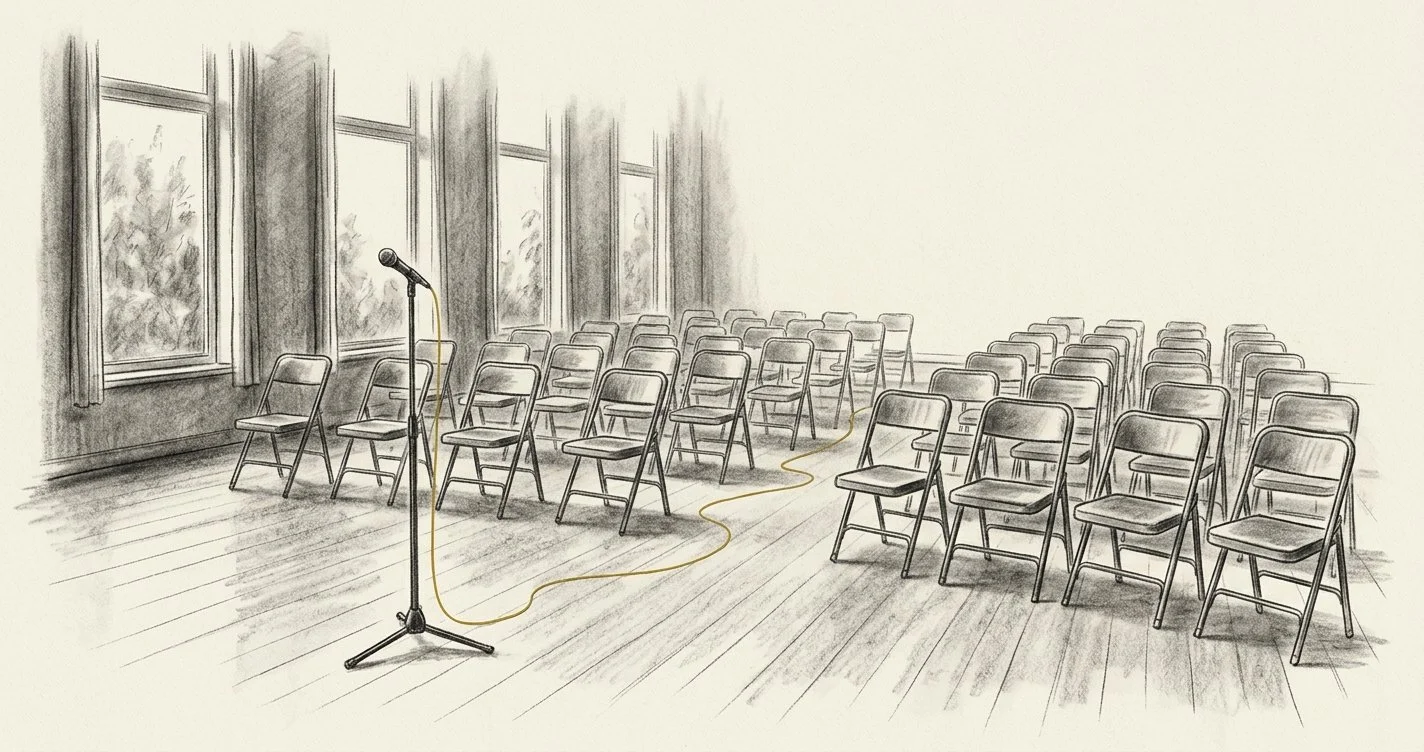
Budget for how long you'll need to be believed, not for the thing you're about to make. When a change is contested, that's months or years, so most of the money belongs in the stretch after the announcement, not in it.
Picture this. Eight months ago your health service announced it's moving birthing services from the local hospital to the regional one, forty minutes up the highway. The decision's made. Now families are doing that drive in labour, the local paper's running their stories, and there's a public forum on Thursday night. You need something that shows people you've heard them. So you go looking for budget, and find the comms line was spent in the first six weeks, on an announcement video with a slow push-in on a new building and the chief executive reading lines about a safer model of care.
That's the trap. It's common, and it's avoidable.
Why the money goes early
Nobody gets there by being careless. Procurement wants a deliverable it can describe. Finance wants one number. Your executive wants something to show on announcement day. A single, well-made film ticks all three boxes.
It just doesn't tick the community's.
And the announcement is when the pressure feels highest, so that's where the money goes. You get three quotes, pick the one whose showreel looks most like what your executive has in mind, and the line's closed before the change has touched a single person.
The announcement answers the wrong questions
A contested change doesn't have one moment of truth. It has a dozen, spread over months or years. Announcement. Consultation. Decision. The first day it takes effect. The first story about someone it hurt. The review everyone was promised. It's the same pattern whether you're consolidating a hospital service, changing how a council delivers care at home, rolling out a policy nobody asked for, or building a road.
Your announcement piece answered the questions people had before they had a stake. Once the change lands, they're asking different ones, and they're asking them angrier. The film can't help you there. It was made for a different conversation.
So you fall back on what's left. Fact sheets, a newsletter, the spokesperson. The exact things people had already stopped believing, at the exact point trust is hardest to win.
There's a less comfortable problem too. Most announcement films are made to look expensive. To your leadership, that reads as serious. To a parent worried about that drive, it reads as an organisation with plenty of money to spend on persuading them. Polish signals control, and control is what a sceptical community is already watching for.
It's a bit like spending the whole wedding budget on the invitations.
Budget the situation, not the asset
Here's the shift. Budgeting the situation means funding your communication for as long as you'll need to be believed, not for the one piece you're about to make. In practice the money splits three ways.
First, work out what's actually true before you spend anything on production. What's the real story here? Not the one in the media release, the one your clinical director tells over a coffee. Where do your own people disagree? Who in the community has standing, and what would they need to see before they'd give you the benefit of the doubt? This is the cheapest part of the whole program and the part most often skipped, because it doesn't produce anything you can upload.
Second, plan to come back. As a documentary filmmaker, the thing I'd fight hardest for in any budget is the second visit. Go back to the same people at each phase: the midwife, the mum who did that drive, the local GP who was sceptical at consultation. One conversation is a testimonial. The same person a year apart, telling you what's changed and what hasn't, is a record. It shows the relationship instead of claiming it, and nobody can fake that after the fact.
Third, look after what you capture so the next phase doesn't start from zero. Consent that covers reuse. A catalogue someone can actually search. A clear answer on who owns it when the team that ran the change moves on. It's the dull part, and it's the difference between footage that's still working for you in year three and a hard drive nobody can find.
If finance wants a split, start here. Hold back at least half of what you'd have spent on the announcement film for the phases after it. You'll still have something for announcement day. It'll just be lighter, and you'll have money left for the moments that decide whether anyone believes you.
Getting it past finance
This is where good intentions usually die, so be practical.
Don't ask for an open-ended program. Ask for a staged one, tied to milestones the change already has. Each stage gets a scope, a cost and a decision at the end: keep going, change course or stop. Procurement can work with that. It looks like every other staged contract they manage.
Then attach each stage to a risk your executive already worries about. Not "community storytelling, phase two". Call it "first month of the new model, when complaints usually spike". You're not asking for more comms money. You're asking to be ready for the moment your own risk register already predicts.
Why the second visit matters most
People believe other people more than they believe organisations, and they believe them most when they can tell nobody scripted them. A mum explaining in her own words why she's come round, or why she hasn't, carries weight no official message ever will. It holds up under scrutiny because there's nothing to catch out.
We've seen how much further real voices go than a single polished piece. For ARACY, the research behind their nurse home visiting program was already rigorous. What it couldn't do on its own was make policymakers feel what it meant for a family. A film following one family through the program did that. ARACY's Diana Harris said it "fills an important gap in our advocacy." For TasGas, instead of one brand film ahead of their rebrand, we made a documentary series about the businesses that depend on the gas network, from George's Dry Cleaners to Bell Bay Aluminium. Each story stood on its own. Together they built a picture no single film could.
Neither worked because the footage was beautiful. They worked because the people in them were real, and the audience could tell.
Where to start
Before you get a single quote, answer one question. How long will we need this community to believe us? If the answer's longer than the announcement, your budget should be too.
If you can't answer it yet, that's the first job. Our Narrative Brief is a half-day session that gets your team to the real story and a plan for how long it'll need telling. It's $3,500, which is a lot cheaper than finding out at that Thursday night forum that the money's gone.
Questions people ask next
How much of the comms budget should go on the announcement?
Less than you think. A good starting point is to hold back at least half of what you'd have spent on an announcement film for the phases that follow. You'll still have something for the day itself. It'll just be lighter, and you'll have money left for the weeks after the change lands, when people have something at stake and the harder questions start.
How do I get a staged comms program through procurement?
Ask for stages, not an open-ended program. Tie each stage to a milestone the change already has, give it a defined scope and cost, and put a decision point at the end: continue, change course or stop. Procurement handles staged contracts all the time. Linking each stage to a risk already on the register makes most of the case for you.
What if the comms budget's already been spent?
Don't try to win the next phase with leftovers spread thin. Go back to the people already involved, the frontline staff, the people the change affects, the locals who've been vocal, and capture where things stand now in their own words. It costs a fraction of an announcement film, and it's evidence you're still listening, which is what people are actually watching for.
Why not make one high-quality film and keep reusing it?
Because the questions change and the film doesn't. A piece made on announcement day answers what people wanted to know before they had a stake. Once the change lands they're asking different things, and replaying the announcement film tells them you're not listening. A smaller record you keep adding to, with the same people over time, stays current in a way one polished film can't.