
One Production, Five Audiences: How to Make a Single Investment Work Harder
Most organisations approach a video production as a single deliverable.
Brief goes in, film comes out. It gets published somewhere, viewed by some people, and the project closes. The footage goes onto a hard drive. Eighteen months later, someone needs to communicate something similar and the whole process starts again from scratch.
This is one of the most expensive habits in organisational communications. Not because the production was wrong. Because the investment was treated as a transaction rather than an asset.
A film is the start of the content, not the content
When a documentary is made well, the raw material it generates is far more valuable than the finished edit. A half-day interview with a community member produces forty minutes of footage. The final cut uses four. The remaining thirty-six minutes contain moments that didn't fit the main narrative but would be exactly right for a funding conversation, a board presentation, an internal briefing, or a social media series six months later.
Most organisations never access that material again. It sits in a folder on someone's laptop, in a format nobody can open, with a file name that tells you nothing about what's inside.
The organisations that communicate most effectively over time are the ones that treat a production as the beginning of a content system, not the end of a project.
What a content system actually looks like
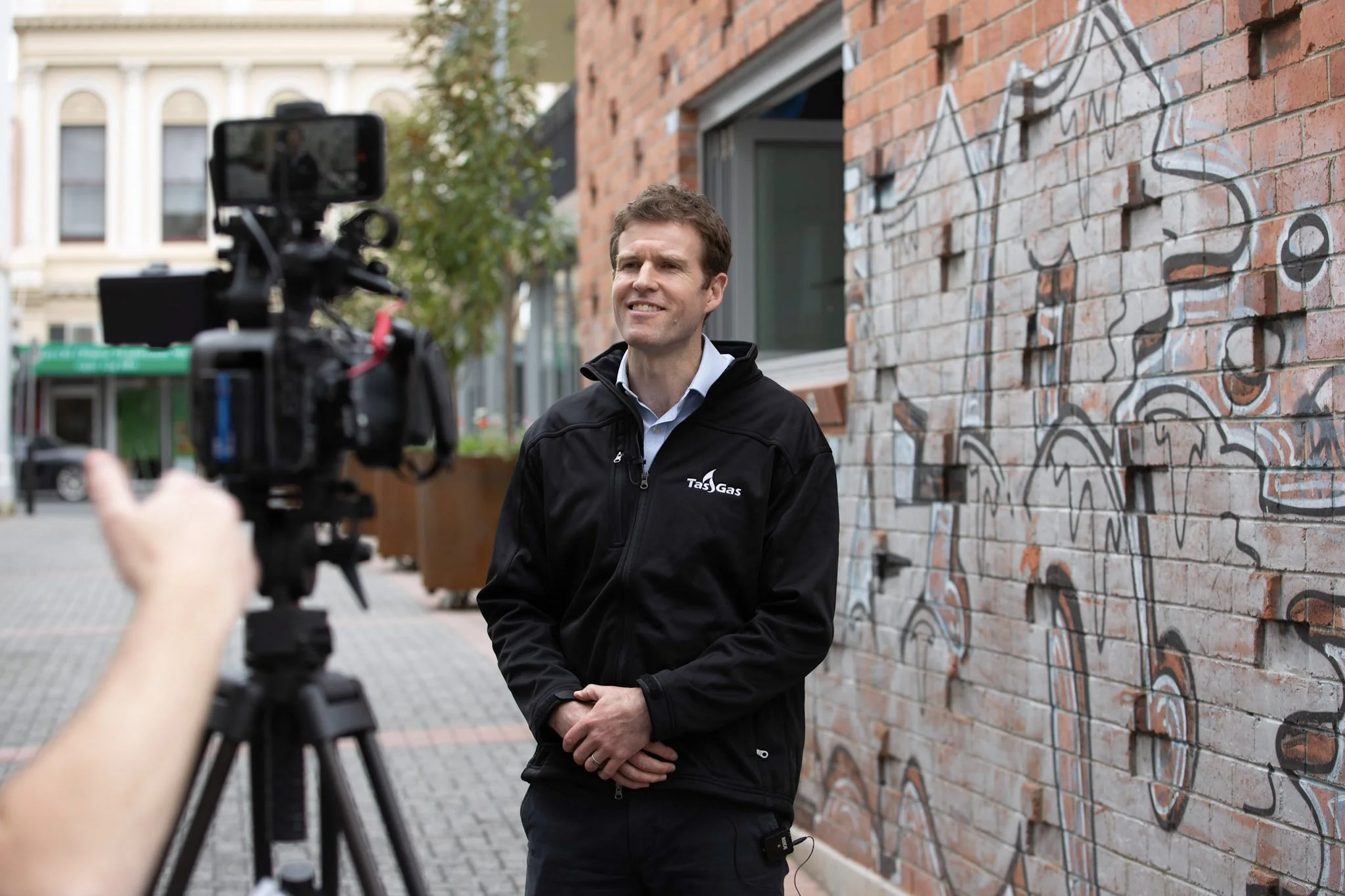
When TasGas needed to build community and industry understanding ahead of a significant rebrand, we produced a series of five documentary-style stories built around real businesses that depended on their gas network. Restaurants, manufacturers, industrial operators — people whose daily operations the infrastructure made possible.
The primary films ran on LinkedIn and the TasGas website. But the production also generated a series trailer, still images from every shoot, short social cutdowns for individual stories, and raw interview material that could be repurposed for future communications as the rebrand progressed.
That wasn't five separate projects. It was one production investment structured from the outset to serve multiple audiences and multiple moments over time.
The difference between a production that works once and a production that keeps working is almost entirely in the planning. Not in the budget.
The questions worth asking before you brief anyone
Before a production begins, the organisations that get the most from their investment tend to ask a different set of questions than the ones that appear in a standard brief.
Who else needs to understand this beyond the primary audience? A community consultation film might also serve a ministerial briefing, an internal staff update, and a funder acquittal. Each needs different framing, different length, different emphasis. If the production is designed with all four in mind from day one, the additional edits cost a fraction of what a new production would.
What moments will we need to communicate in twelve months that we could capture now? A program at launch will have a different story to tell at the two-year mark. If the participants are being filmed anyway, capturing material that will be relevant later costs almost nothing in the moment and a great deal to recreate later.
What will we do with the footage after the project closes? This is the question most briefs don't ask and most organisations most regret not asking. Raw footage with properly managed consent documentation and organised cataloguing is a strategic asset. Raw footage on a hard drive in a folder called "Final Final FINAL v3" is a liability waiting to surface at the worst possible moment.
The footage your organisation already has
For many organisations, the most valuable content investment isn't a new production. It's understanding what they already have.
Years of community engagement, stakeholder consultation, program delivery, and organisational storytelling have generated footage that most organisations have never properly inventoried. Interviews that were cut for time but remain compelling. B-roll from locations that are no longer accessible. Stories from participants who have since moved on but whose experience is exactly what a current funding conversation needs.
That material exists. For most organisations it's just not findable, not cleared, and not connected to anyone who knows what to do with it.
Stewardship — the active management of footage as a strategic asset rather than a production by-product — is what turns an archive into a library.